


 If you want to see every post I’ve written, starting with the most recent, this is the place to start!
 I’ve been traveling the globe solo, and many of my posts share thoughts and resources specifically for other solo travelers. If you’re a fellow solo traveler, or you’re thinking about solo travel, this is a collection you will find of interest.
 If you’re looking to read blog posts about specific destinations, click the country of your interest below to go to it’s blog page and get country-specific reviews and thoughts.
 Sometimes I write posts where I give insider information on certain cities I’ve visited, which may be more along the lines of places to go, how to save money, etc. If that’s your main interest, check out this compilation of posts.
 In 2020, I was traveling in New Zealand as the coronavirus pandemic brewed, and, got stuck there. If you want to read about what this time was like and traveling during this time, check out this page.
 At the heart of international travel is learning about the many different cultures and ways of being around the world. The posts compiled on this page speak, specifically, about the cultural observations I’ve had.
 Many of my blog posts are about things I’ve discovered about myself or about being, while I’ve traveled. If you’d like to focus on posts that only have self-discovery themes, click the button below.
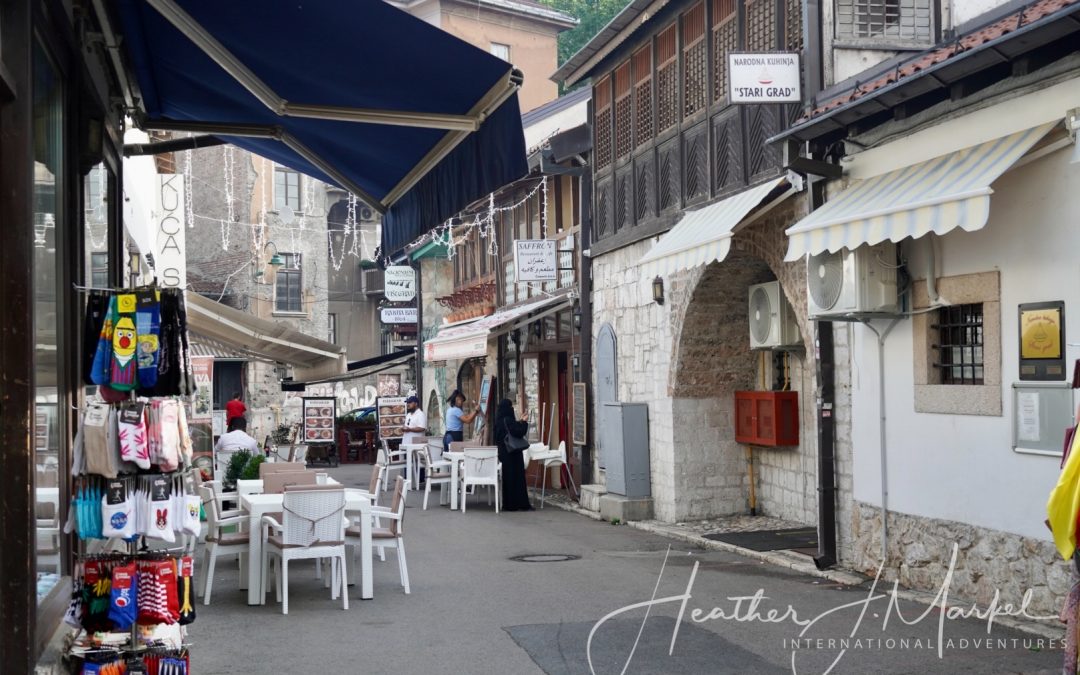

BOSNIA AND HERZEGOVINA
(This is the second in a series of articles on Sarajevo. Missed the first one? Click here.) Since I’m able to check in to my hotel early, I just make the morning Sarajevo free walking tour.
Neno is our guide. Once again, like my experience in Zagreb, he is a young man who has lived through a war, and it’s a profound experience. Neno starts the tour by setting the scene with some background about the region. We learn, again, about Tito and are told he rules the region with an iron fist. If you say something bad, you go to jail. (As Luka told us on our Croatia war tour, remember that stories are told from the lens of the country you’re from. The information stated in this post is from the point of view of someone that grew up in Sarajevo. I’m learning that perspectives play a large role in politics and war, so it’s important to read, and also, understand that information may not be completely objective.)
At the end of the 1980’s the Soviet Union was falling apart. The breakup started with Slovenia. After them was Croatia, then Macedonia. Bosnia was the fourth country to separate. Bosnia has Slavs, Croates and Bosnians. There are Christians and Muslims. Ethnic Serbs in Bosnia said they were against the separation. The idea was to cut the country into ethnic pieces. Not all Serbs and Croates wanted this. Some people wanted multi cultural and mixed communities. War started one month after independence.

Ethnic Serbs helped. They only did a siege to isolate and mentally impact them. No fighting. Just shooting from the hills. In other parts Serbs entered and did genocide racial cleansing. 11,500 people died in Sarajevo among 300,000 people.
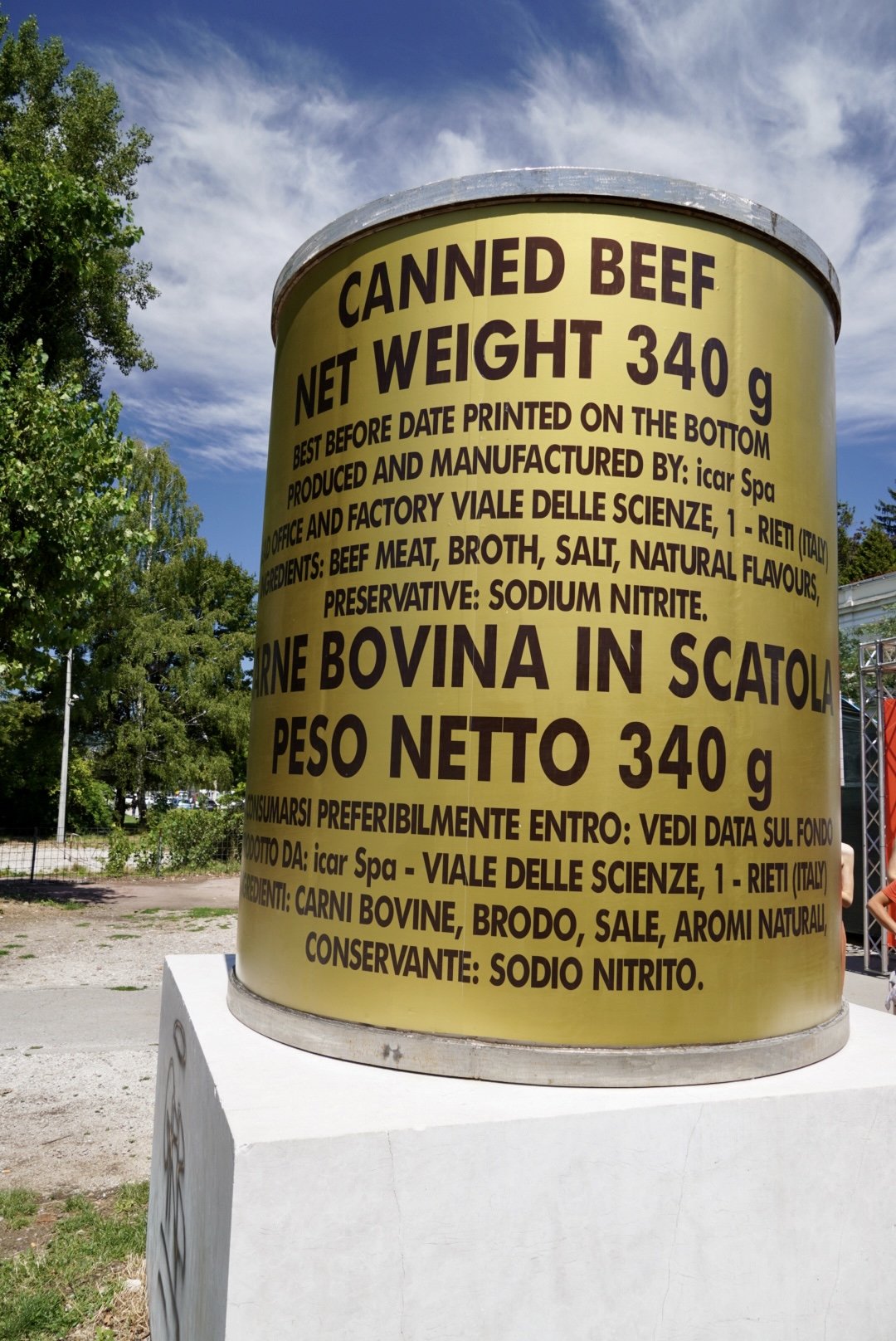
The United Nations sent peace keepers. They provided free food and medicine. They remained neutral. Some of the food was expired, and Neno recalls a cat who ate some of the expired canned food and all it’s fur fell out. There’s even a monument to the awful food, and it’s right in front of the US Embassy. People are angry that the peace keepers do nothing to help during the war. They want them to jump in to the fighting and protect them.
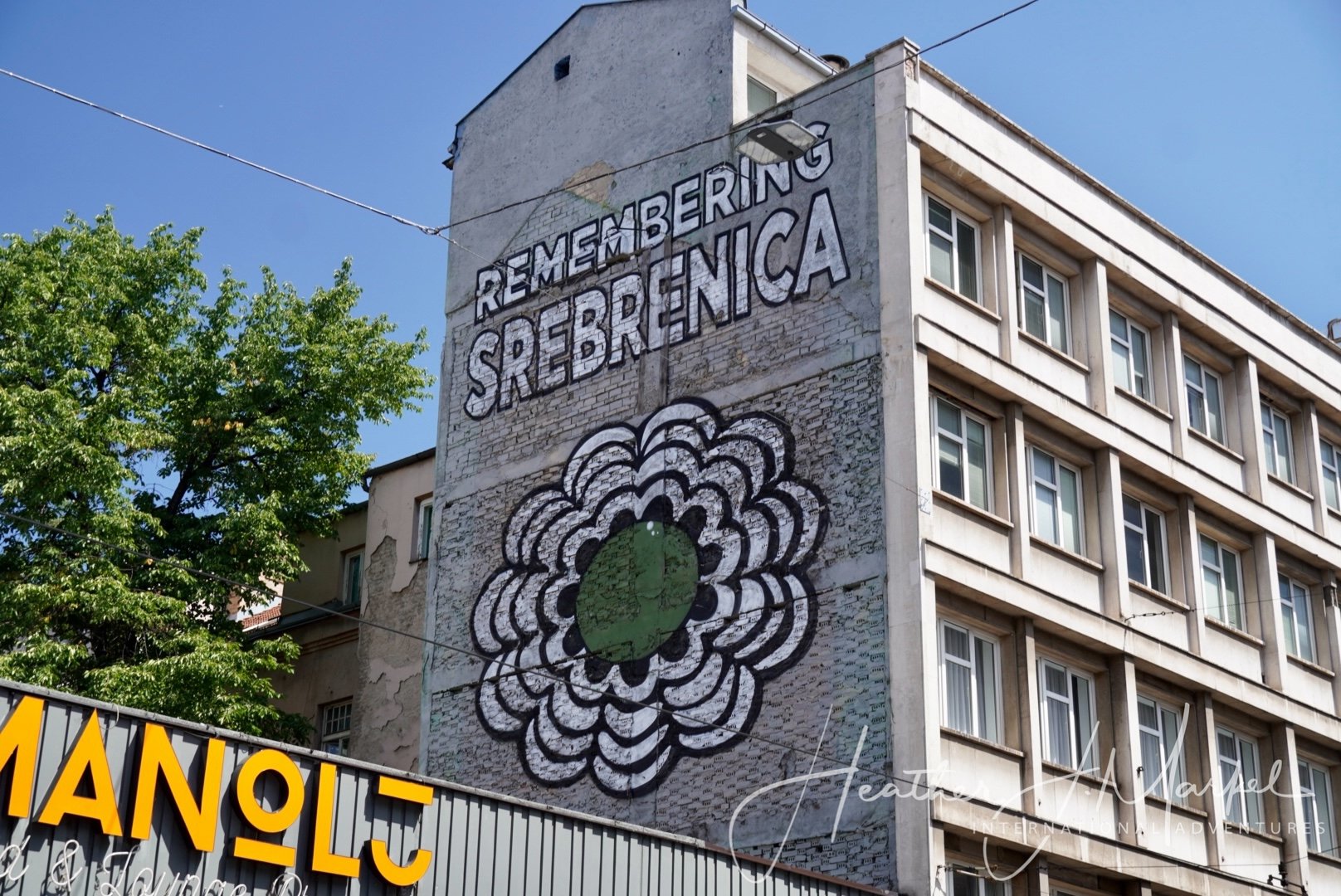
Neno confirms that different kids get different education throughout country. July 11th is recognized as an act of genocide when Bosnian Serbs troops capture a U.N. safe area and kill 8,000 Muslim men. There is a memorial with a flower commemorating this day with 11 petals for July 11. Neno explains that north and east of the country has many ethnic Serbs. If you wear flowers they will ask you to remove the flowers because they deny the history. The Hague recognizes it but some people want to hide the history. I am fascinated and horrified at the same time.
NATO ended the war. It was called the Dayton Agreement because it was made in Ohio. This agreement made a compromise to keep everyone as one country, but ethnic Serbs will get the north and east. In percentages, they got 49% off the territory. Autonomy is created in Bosnia with their own education, Supreme Court and police. A National parliament is created with 3 presidents. Serb President represents all Serbs. Croate President leads all croates in the country. There is no consensus so they can only make changes if they all agree. This system is why they are not part of the EU.
They are still figuring out who committed war crimes, and, apparently, they won’t teach students about this war until 50 years have passed.
Taxes are very high because the people must pay for three presidents! Because consensus is required, and, essentially, impossible to obtain, this explains why there are no handicapped facilities.
Right now, there is a national army, but separatists want to separate and form their own army. The unemployment rate is high. Their leaders don’t talk about this. Young people leave Bosnia.
Young people here don’t make protests. They’re afraid to protest because system is very fragile. I was saddened to hear Neno’s summary of the situation – Peace is the absence of the war and they don’t want to start another one.
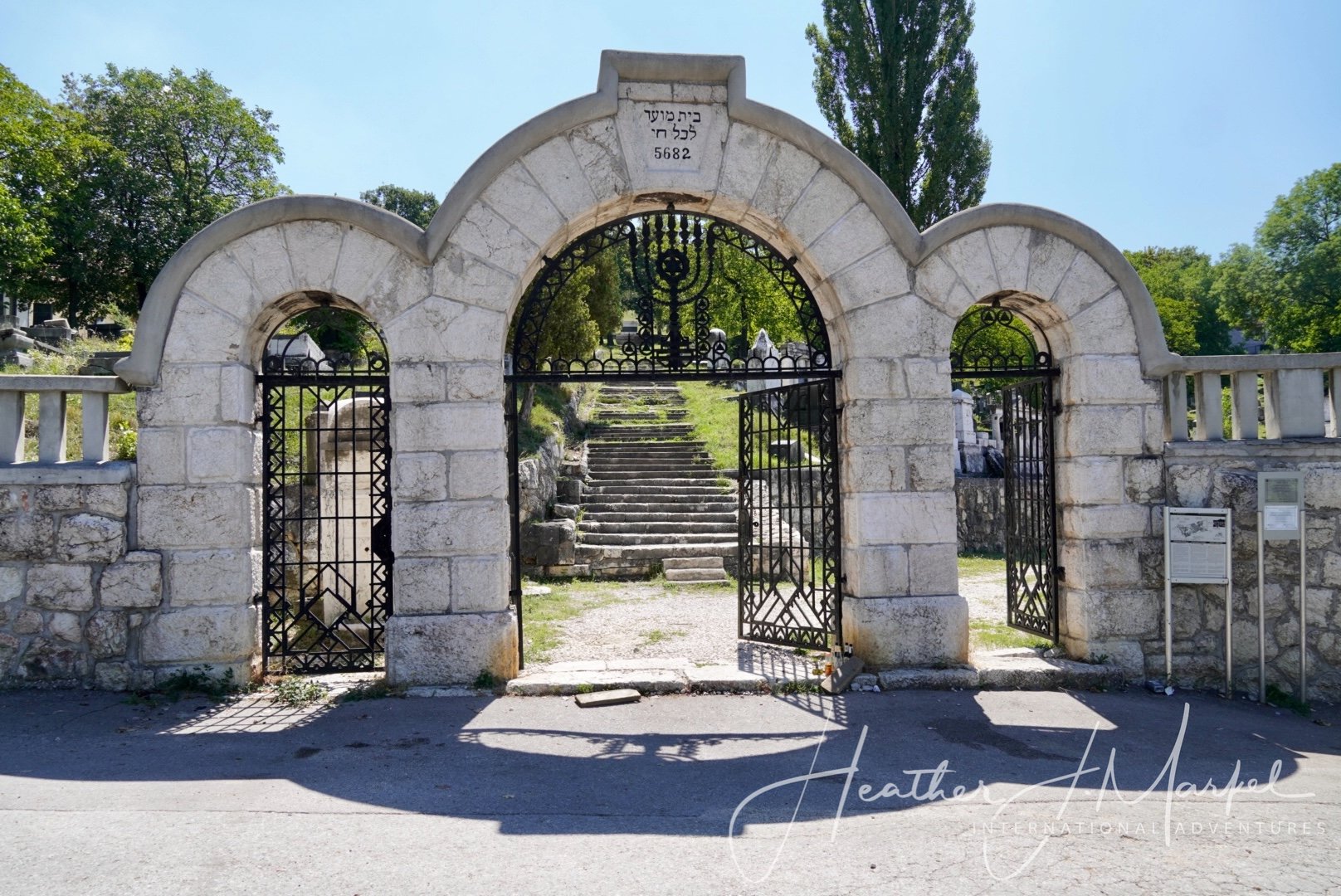
Sarajevo used to have 70,000 Jews before World War 2. They had a very active Jewish community. There was one synagogue in the country. Jews were mostly deported. Only 600 in sarajevo. There are 400,000 people in sarajevo. 600 of them are Jews. I visit the Jewish cemetary one morning while I’m there. It is empty of people, but haunting and beautiful.
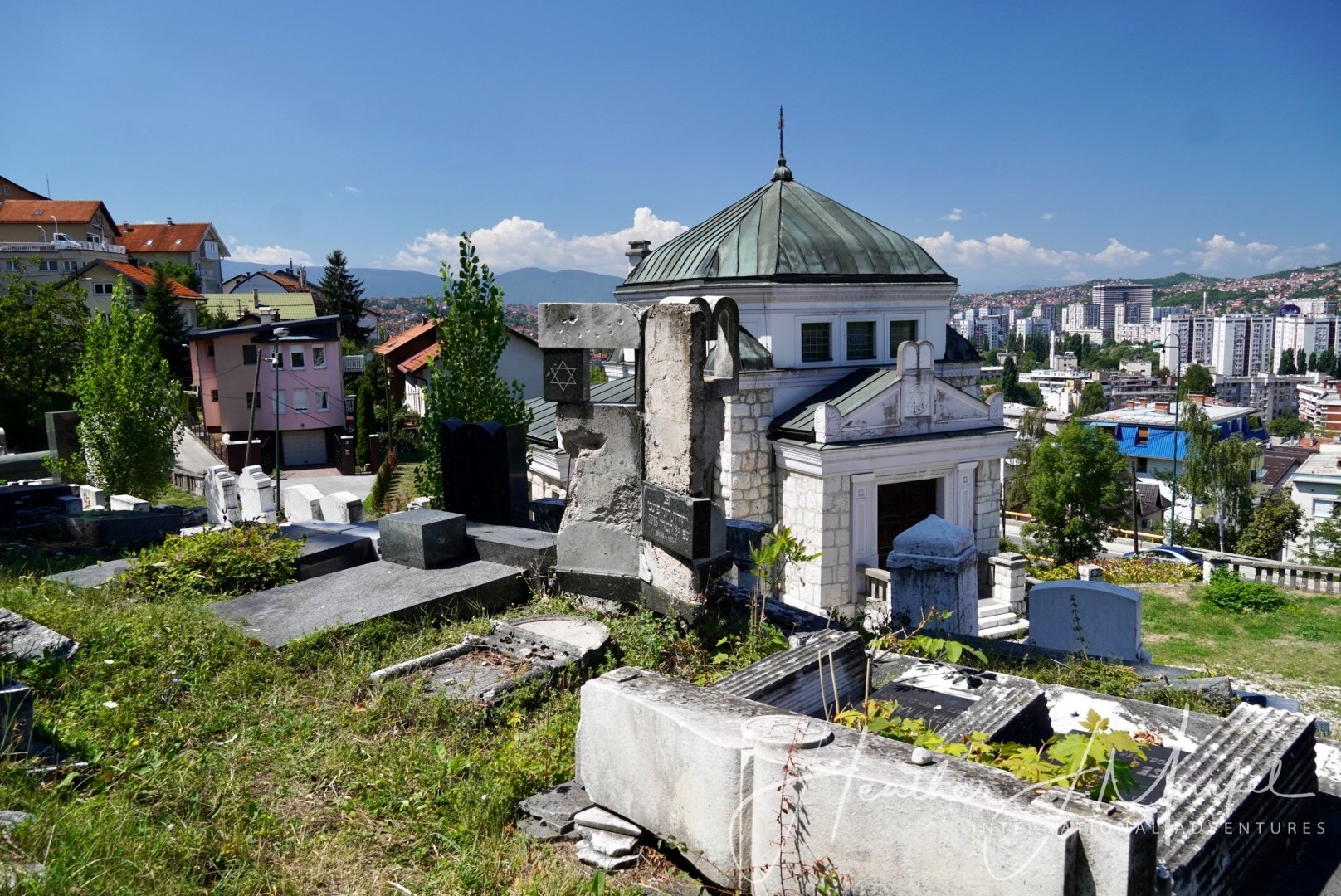
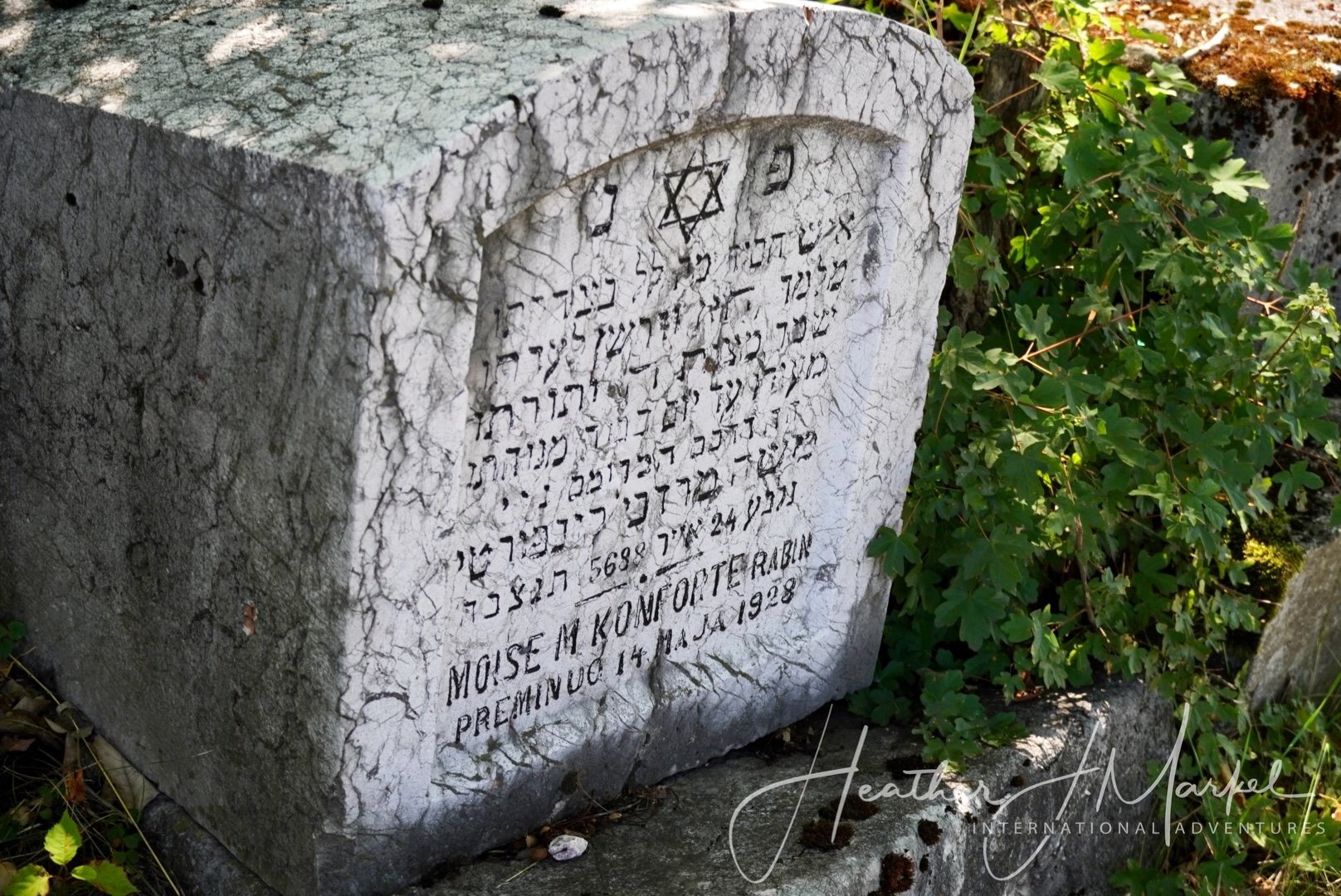
Sarajevo is rich with history, beauty and tragedy. On my free walking tour and subsequent war tour, I learn infinitely more about it. To be continued….
Want to Learn About Full Time Travel?





We made a brief visit to Bosnia Herzogovinia but did not visit Sarajevo. I would love to spend more time in that region and we hope to make it happen in the next couple of years. The history is so amazing and the people are so wonderful…despite all they have bene through.
Couldn’t agree more Laureen and I hope you are able to get there!
Really interesting post & resonated with me after my recent visit to Vietnam. It’s important to understand these aspects of history from all angles, through museums & talking to people who lived through it. I think it’s also essential to encourage everyone to do the same. I had a similar response in Albania, discovering the history was harrowing but important & especially terrifying when you realise it happened in our lifetime. I haven’t been to Sarajevo but you’ve put it on my map. Thank you.
I will be writing about Albania soon. Another interesting place indeed!
Fascinating, thought provoking & sad, all at the same time! Isn’t it amazing that people who have gone through tough times or war are often still the ones that appear happy and smiling. It is as if they appreciate what they have far more, perhaps because of their suffering, than others that have an entitlement mentality. Great post, Heather!
Yes! You’re so right about that and it amazes me.